
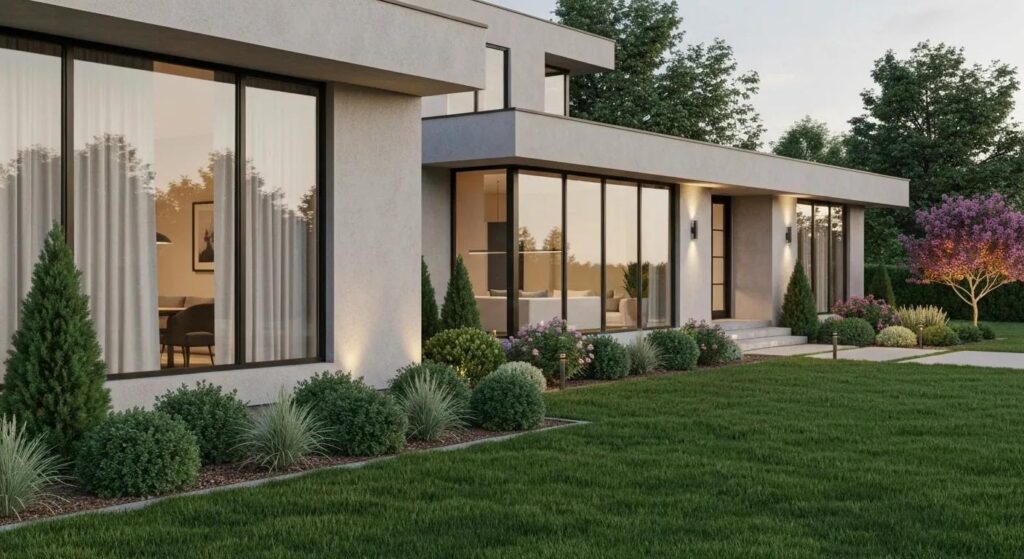
From the initial spark of an idea to the final walkthrough, our photorealistic digital models empower clients to see every detail before construction even begins. At Trade Craft Design, we transform your concepts into lifelike visuals, bridging imagination and reality to streamline approvals and build unwavering stakeholder confidence. This guide will walk you through what 3D rendering services entail, the incredible benefits they offer, our meticulous process, the specialized renderings we provide, and why Omaha businesses rely on us. You’ll discover how these visualizations speed up decisions, make presentations shine, and drive property sales, all while showcasing our personalized approach to making your vision a tangible reality.
What Are 3D Rendering Services and How Do They Bring Your Design Vision to Life?
Our 3D rendering services craft lifelike images and animations of architectural and interior designs, using cutting-edge computer graphics to simulate materials, lighting, and spatial relationships. By blending advanced software with our design acumen, these visualizations clarify intricate layouts, eliminate costly guesswork, and foster confident decision-making. Imagine a homeowner seeing exactly how a custom cabinetry finish will complement their flooring before ordering a single piece of material.
To truly grasp the core categories of 3D renderings that revolutionize design communication, let’s break them down.
| Rendering Category | Description | Key Advantage |
|---|---|---|
| Architectural Visualization | Exterior and structural models showcasing facades | Validates scale, context, and curb appeal |
| Interior Visualization | Photorealistic room scenes with finishes and furniture | Guides material choices and lighting effects |
| Product Rendering | Individual items rendered in isolation or context | Highlights product details and supports marketing |
| Animation & Walkthrough | Dynamic tours through spaces | Engages stakeholders and demonstrates flow |
What is 3D rendering and architectural visualization?
3D rendering is the art of transforming digital models into incredibly realistic images. Architectural visualization specifically hones in on building exteriors, site context, and structural intricacies. This powerful combination allows clients and project teams to meticulously inspect façades, materials, and proportions long before construction commences. Our advanced rendering engines calculate lifelike shadows, reflections, and textures, making virtual scenes virtually indistinguishable from actual photographs. By ensuring precision during the planning phase, architectural visualization significantly reduces on-site revisions and expedites the permitting process.
3D Rendering in Architecture
3D rendering is an indispensable tool in architecture, enabling the creation of stunningly realistic images and animations of building designs. This technology empowers clients and project teams to visualize exteriors, materials, and proportions before construction begins, leading to more informed decisions and fewer costly on-site revisions.
Smith, A., Architectural Visualization: A Guide to 3D Rendering (2022)
Embracing this technology shifts decision-making from abstract concepts to tangible realities, paving the way for superior client presentations and seamless collaboration.
How do 3D renderings elevate interior design and home building projects?
Our photorealistic interior renderings vividly illustrate how light interacts with finishes, furniture, and décor. Clients can effortlessly compare paint colors, fabric patterns, and fixture placements in stunning detail, banishing uncertainty. This clarity dramatically accelerates approval processes and minimizes expensive change orders during construction. By previewing layouts and material combinations early on, homeowners make confident choices that perfectly reflect their personal style and budget. This early visualization fosters a collaborative spirit between designers, builders, and clients, resulting in spaces that are not only beautiful but also function flawlessly for years to come.
Benefits of 3D Visualization in Interior Design
Photorealistic interior renderings provide clients with an unparalleled understanding of how light interacts with finishes, furniture, and décor. This clarity is instrumental in making informed choices, speeding up approval processes, and reducing costly change orders during construction. Early visualization cultivates strong collaboration between designers, builders, and clients, leading to spaces that function beautifully.
Jones, B., Interior Design and 3D Rendering: A Practical Approach (2023)
As confidence grows through these detailed visuals, the natural next step is to explore the specific rendering types we offer here at Trade Craft Design.
What types of 3D renderings does Trade Craft Design offer?
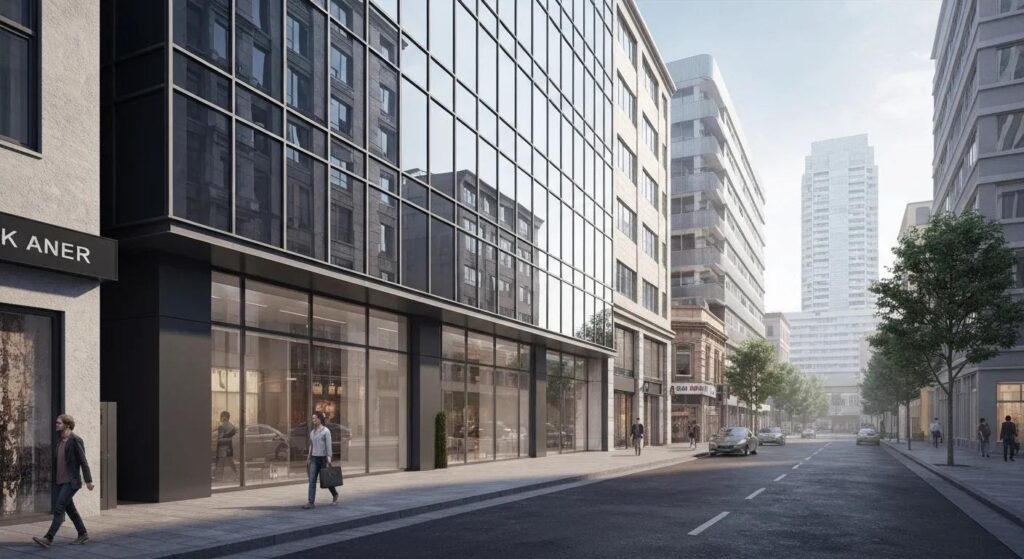
To cater to a wide spectrum of project needs, Trade Craft Design proudly offers three primary rendering categories:
- Architectural Renderings – Covering everything from exterior façades and site plans to captivating aerial views.
- Interior Renderings – Bringing residential and commercial interiors to life, including detailed lighting studies.
- Product and Prop Renderings – Showcasing furniture, fixtures, and material samples within their intended context.
Each of these services includes iterative revisions, ensuring your final visualization perfectly aligns with your unique vision. This structured approach leverages our comprehensive design expertise and deep understanding of the Omaha market to deliver visuals that truly resonate with both clients and the community.
How Do 3D Renderings Shape Your Vision and Accelerate Decision-Making?
Photorealistic renderings act as a universal language, bridging the gap between designers, builders, and clients by illustrating spatial relationships and material selections with exceptional clarity. This minimizes misinterpretation and significantly speeds up approvals.
Before we dive into the benefits, let’s consider a concise summary of the primary advantages.
| Benefit | Mechanism | Outcome |
|---|---|---|
| Clarity | Realistic light and texture simulation | Faster material decisions and fewer revisions |
| Confidence | Virtually touring finished spaces | Higher stakeholder buy-in and satisfaction |
| Cost Control | Early detection of design issues | Reduced change orders and budget overruns |
| Marketing Impact | Engaging visuals for listings and presentations | Stronger property exposure and faster sales |
What are the key benefits of photorealistic 3D visualizations for clients?
Photorealistic 3D visualizations dramatically enhance client understanding by simulating true-to-life materials, lighting, and scale. This precision empowers clients to evaluate design proposals within their intended context, boosting confidence and reducing approval timelines. By visualizing spaces before construction, clients can anticipate potential challenges and refine their preferences early on, which minimizes costly alterations on site. The result is a seamless design process that respects both aesthetics and budgets.
Experiencing your future space virtually also establishes a compelling narrative that drives decision-making forward.
How do 3D renderings enhance client presentations and stakeholder buy-in?
Interactive walkthroughs and high-resolution images transform presentations into truly immersive experiences. Stakeholders can explore layouts, comment on intricate details, and align expectations in real time. This level of engagement builds consensus among homeowners, architects, and contractors, ensuring everyone shares a unified vision. When clients virtually walk through digital spaces, they gain a profound understanding of functionality, flow, and ambiance, making design approvals decisive rather than tentative.
Such immersive visual storytelling paves the way for stronger collaboration on every project phase.
Why is 3D visualization superior to traditional photography for design approval?
Traditional photography captures built environments only after completion, making it unsuitable for crucial pre-construction decisions. In stark contrast, 3D visualization produces accurate previews of unbuilt spaces, enabling design validation before any physical work even begins. It offers unlimited viewpoint adjustments, effortless material swaps, and the ability to explore various lighting scenarios—capabilities that static photos simply cannot match. This proactive approach eliminates guesswork and helps teams avoid costly retrofits, ensuring projects stay precisely on schedule and within budget.
Experiencing proposals virtually elevates trust, which leads us to the transparent process we meticulously follow at Trade Craft Design.
What Is the Step-by-Step 3D Rendering Process at Trade Craft Design?
Our meticulously structured workflow transforms your ideas into detailed visualizations through collaborative stages designed to foster transparency and build trust.
- Concept Development – We begin by gathering your sketches, measurements, and inspiration to precisely define the scope and style.
- 3D Modeling – We construct CAD models of structures and interiors to scale, meticulously capturing every architectural element.
- Initial Rendering – Preliminary renders showcase materials and lighting for your initial feedback.
- Review & Collaboration – You’ll review the visuals, providing input on finishes, viewpoints, and specific details.
- Final Delivery – We deliver polished, photorealistic images and walkthroughs in print-quality formats.
This process ensures your feedback actively shapes each iteration, resulting in visualizations that accurately represent the final build.
How does Trade Craft Design transform your vision into detailed 3D models?
Utilizing precise floor plans and elevation data, we create digital models that faithfully reflect actual site dimensions and architectural intent. This model serves as the essential foundation for all visualization work, enabling accurate lighting calculations and material mapping. By embedding local context—such as sun angles, surrounding structures, and landscape features—we produce renderings that authentically capture Omaha’s unique environment. This meticulous attention to detail transforms conceptual sketches into reliable digital prototypes.
A robust model unlocks the full potential of the rendering phase, where realism truly comes to life.
What are the stages of rendering, review, and final delivery?
Initially, we apply textures, colors, and lighting to the 3D model to create a test render. You then receive draft images for your commentary on finishes, furniture placement, and camera angles. After consolidating your feedback, we refine materials, adjust sunlight exposure, and enhance details for the final render. Deliverables include high-resolution stills, 3D animations, or interactive panoramas, all optimized for presentations and marketing materials.
Clear communication at each stage eliminates surprises and cements project alignment.
How do client feedback and collaboration integrate into the rendering process?
Clients review draft visuals through a user-friendly online collaboration platform, allowing them to mark areas for adjustment directly on the images. We schedule dedicated review sessions to discuss preferences, address any concerns, and suggest design enhancements. This iterative dialogue ensures every nuance—from the precise height of pendant lighting to the specific edge profile of a countertop—meets your exact expectations. By centering collaboration, we build rapport, foster trust, and create a final visualization that feels uniquely yours.
Seamless feedback loops cultivate a sense of ownership over the design and reinforce confidence in the final outcome.
Which Types of 3D Renderings Does Trade Craft Design Specialize In?
Our expertise encompasses architectural, product, and immersive visualizations, each meticulously tailored to specific project goals and audience needs.
| Visualization Type | Focus | Application |
|---|---|---|
| Exterior Architectural | Building facades, landscaping, context views | Master planning, façade approvals |
| Interior Scenes | Room settings, furniture placement, light studies | Design approvals, client presentations |
| 3D Floor Plans | Isometric and top-down space layouts | Space planning, code compliance |
| Product & Material Renders | Individual items and material samples | Marketing, specification, client selection |
| Virtual Tours & VR | 360° panoramas and interactive walkthroughs | Real estate marketing, immersive design reviews |
This specialization ensures that every visualization type benefits from our deep knowledge of materials, lighting, and user engagement.
What are architectural renderings: exterior, interior, and floor plans?
Exterior renderings vividly illustrate building façades, site context, and material finishes, helping stakeholders approve scale and curb appeal. Interior renderings meticulously recreate room atmospheres, showcasing finishes, furnishings, and lighting. 3D floor plans provide clear top-down perspectives of spatial layouts, circulation paths, and functional adjacencies. Together, these deliverables offer a complete visual toolkit for design validation and compelling marketing collateral.
Combining these perspectives gives clients complete confidence before breaking ground.
How do product visualizations and 360-degree views support design decisions?
Product visualizations present individual items—such as fixtures, furniture, or material samples—in isolation or within installed settings, highlighting texture, form, and color accuracy. A 360-degree view allows clients to inspect every angle interactively, ensuring their choices align perfectly with their aesthetic and functional needs. This level of detail accelerates procurement decisions, reduces returns, and enriches marketing assets.
High-fidelity product visuals reinforce the design narrative and streamline client approvals.
What interactive visualizations, including VR and virtual tours, are available?
Interactive panoramas and VR tours immerse viewers directly within digital spaces, allowing them to navigate rooms and exteriors as if they were physically present. Users can effortlessly toggle furniture arrangements, swap materials, and experience lighting changes in real time. This level of engagement shifts design discussions from hypothetical to experiential, empowering clients to make truly informed choices and accelerating project momentum.
Immersive visual tools elevate presentations into collaborative design experiences, setting the stage for why Trade Craft Design leads the way in Omaha.
Why Choose Trade Craft Design for Your 3D Visualization Needs in Omaha?
Trade Craft Design seamlessly blends local expertise, personalized collaboration, and an unwavering commitment to enduring quality, ensuring your 3D visualizations not only meet but exceed expectations.
Our approach to every project is rooted in authentic partnership. We listen intently to your aspirations, align renderings with your lifestyle goals, and guide you through aesthetic decisions with complete transparency. This collaborative process fosters deep trust and delivers tailored visual assets that truly reflect your unique vision.
| Distinctive Strength | Benefit | Why It Matters |
|---|---|---|
| Personalized Collaboration | Regular check-ins, flexible revisions | Keeps your vision at the core of every image |
| Local Omaha Insight | Contextual knowledge of neighborhoods and climate | Ensures renderings resonate with local audiences |
| Durable Material Focus | Attention to long-lasting finishes and fixtures | Prevents design obsolescence |
| Holistic Design Framework | Integration with interior, architecture, and build | Streamlines project coordination and consistency |
This powerful combination of personalized service and technical excellence cements our reputation and drives lasting client satisfaction.
How does Trade Craft Design’s personalized and collaborative approach benefit clients?
Our process kicks off with in-depth consultations designed to fully understand your style, functional requirements, and project scope. We actively incorporate your feedback at every milestone, adapting visuals to evolving preferences and budget considerations. By treating clients as true creative partners, we build strong rapport and ensure every decision is informed by a shared vision and expert guidance.
This level of engagement strengthens trust and delivers exceptional outcomes.
What quality standards and durable materials support lasting design satisfaction?
We render materials based on precise manufacturer specifications and real-world performance data, simulating wear characteristics and maintenance needs. From high-traffic flooring to climate-resistant exteriors, our renderings accurately reflect quality choices that are built to stand the test of time. Accurate visual previews minimize surprises and enable proactive procurement of lasting finishes.
Visualizing real-world performance ensures your design remains beautiful and functional for years to come.
How does local Omaha knowledge enhance project relevance and success?
A deep understanding of Omaha’s seasonal light patterns, distinct neighborhood aesthetics, and local building codes allows us to create renderings that feel both authentic and compliant. We meticulously factor in sun angles for accurate shadow studies, select regional materials for credibility, and reference community contexts in exterior scenes. This local insight fosters stakeholder approval and positions projects for success within the Omaha market.
Local expertise transforms generic visuals into meaningful representations of place and purpose.
How Can 3D Renderings Boost Real Estate Marketing and Property Sales?
Virtual staging and pre-construction visuals significantly accelerate property marketing by showcasing spaces before they even exist, attracting buyers with engaging, lifelike presentations.
A compelling visual narrative often seals the deal, enabling properties to stand out in competitive markets.
What role do virtual staging and pre-construction visuals play in real estate?
Virtual staging digitally furnishes empty properties, helping buyers envision functional layouts and desirable décor styles. Pre-construction renderings empower developers to market off-plan projects, securing commitments before groundbreaking even occurs. These visual strategies effectively reduce vacancy periods and enhance perceived value by highlighting a property’s design potential.
By presenting aspirational yet achievable scenarios, real estate professionals close deals faster.
How do 3D renderings attract buyers and simplify property marketing?
High-resolution images and interactive tours captivate online audiences and generate more inquiries. Buyers spend more time exploring animated walkthroughs, fostering deeper emotional connections with spaces. Agents leverage these powerful assets across websites, social media, and brochures, ensuring consistent branding and market differentiation.
Engaging visuals drive higher click-through rates and quicker conversions.
What are examples of successful Omaha real estate projects using 3D visualization?
In Midtown Omaha, a mixed-use development effectively utilized exterior renderings to secure zoning approvals and generate early tenant interest. For a Blackstone District renovation, interior walkthroughs significantly reduced furnishing uncertainties and accelerated lease sign-offs. These compelling case studies demonstrate how targeted visual assets lead to swift stakeholder alignment and robust sales pipelines.
Successful local examples illustrate the tangible value of advanced visualization.
What Are Common Client Questions About 3D Renderings?
Clients frequently inquire about costs, timelines, portfolio access, and how renderings integrate with broader design services. Clear, upfront answers build transparency and set realistic expectations.
To address these queries concisely, here are straightforward insights.
| Question Topic | Explanation | Typical Outcome |
|---|---|---|
| Cost Structure | Custom quotes based on complexity, image count | Investment clarity before engagement |
| Project Timeline | 2–4 weeks from concept to final delivery | Predictable scheduling for planning |
| Portfolio Access | Curated gallery of past projects and case studies | Informed selection of style and approach |
| Service Integration | 3D renderings embedded within interior design flow | Seamless coordination from concept to build |
How much do 3D rendering services cost at Trade Craft Design?
Rendering investments naturally vary based on project scope, desired image resolution, and the type of deliverables required. We provide detailed proposals that clearly outline costs for each rendering, animation, or interactive model. This transparency empowers clients to budget accurately and select the ideal package for their specific needs.
Predictable pricing eliminates surprises and fosters trust from the very beginning.
How long does the 3D rendering process take?
From the initial concept development right through to final delivery, typical timelines range from two to four weeks, depending on the complexity of the project and the number of revision cycles. We establish clear deadlines upfront and adhere to scheduled review sessions, ensuring on-time delivery for your marketing campaigns or critical construction milestones.
Streamlined schedules keep projects moving forward and stakeholder expectations perfectly aligned.
Can I see examples of previous 3D rendering projects?
We maintain a carefully curated portfolio that showcases a diverse range of architectural and interior renderings, animations, and virtual tours. Prospective clients are encouraged to explore real case studies that highlight our accuracy, stylistic versatility, and collaborative process. Reviewing past work is a key way to build confidence in our ability to realize your unique design visions.
Access to case studies reinforces our credibility and effectively guides creative decisions.
How do 3D renderings integrate with interior design and home building services?
3D renderings seamlessly connect with our full suite of interior design and project management offerings. These visuals serve to inform material selection, budgeting, and construction sequencing. By aligning renderings with design documentation and build plans, we ensure a cohesive workflow from the initial concept all the way through to successful completion.
Integration guarantees that the vision presented visually translates into a successful built result.
Crafting your vision with precise visualizations accelerates decision-making, minimizes risk, and significantly enhances marketing impact. Our structured process, specialized renderings, and deep Omaha insight position Trade Craft Design as your ideal partner for turning ideas into reality. Ready to see your project come to life through stunning 3D renderings? Discover how our collaborative approach and local expertise can elevate your next design or real estate venture—visit “Tradecraft Design: Interior Design and Project Management” to explore our portfolio and request a consultation today.